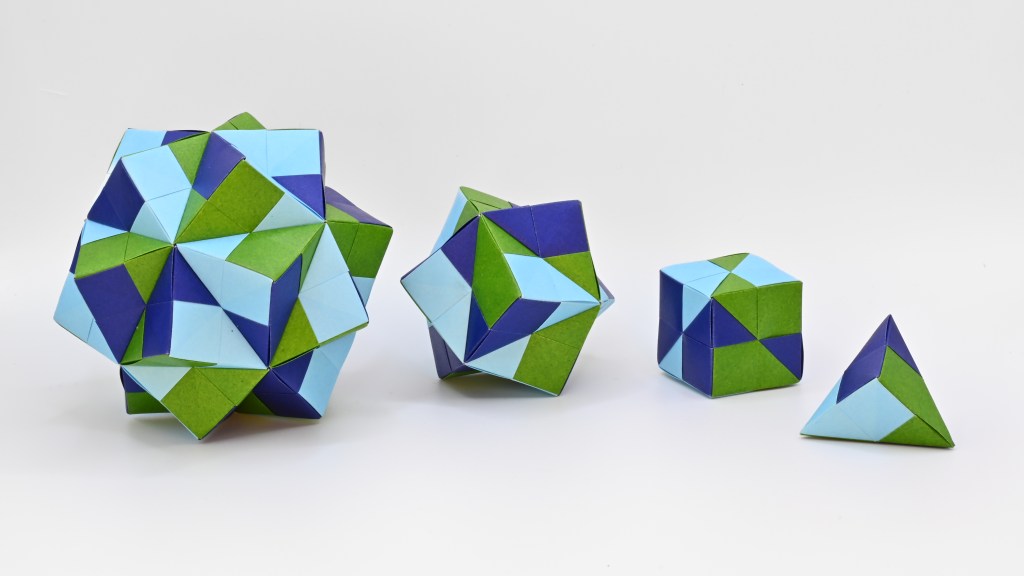
The original Sonobe unit was created by Mitsunobu Sonobe, and the cube was published in a magazine in the 1960’s. In the following decades more configurations were discovered, including the augmented octahedron and icosahedron.
Each unit is folded from a square sheet of paper. Sonobe units can be left or right handed, as long as they are all the same.
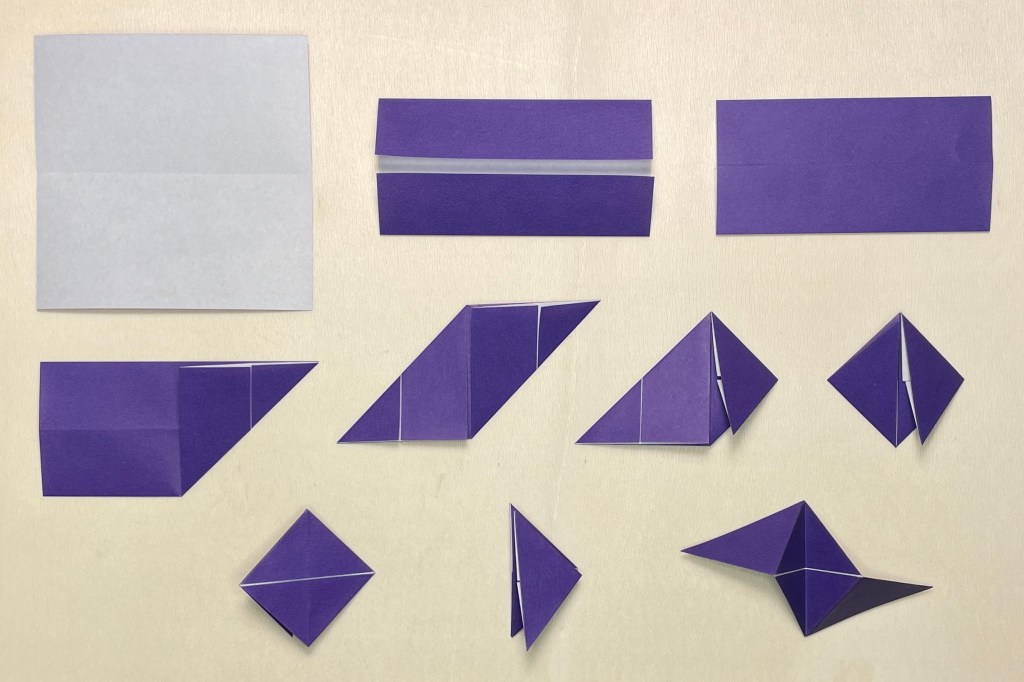
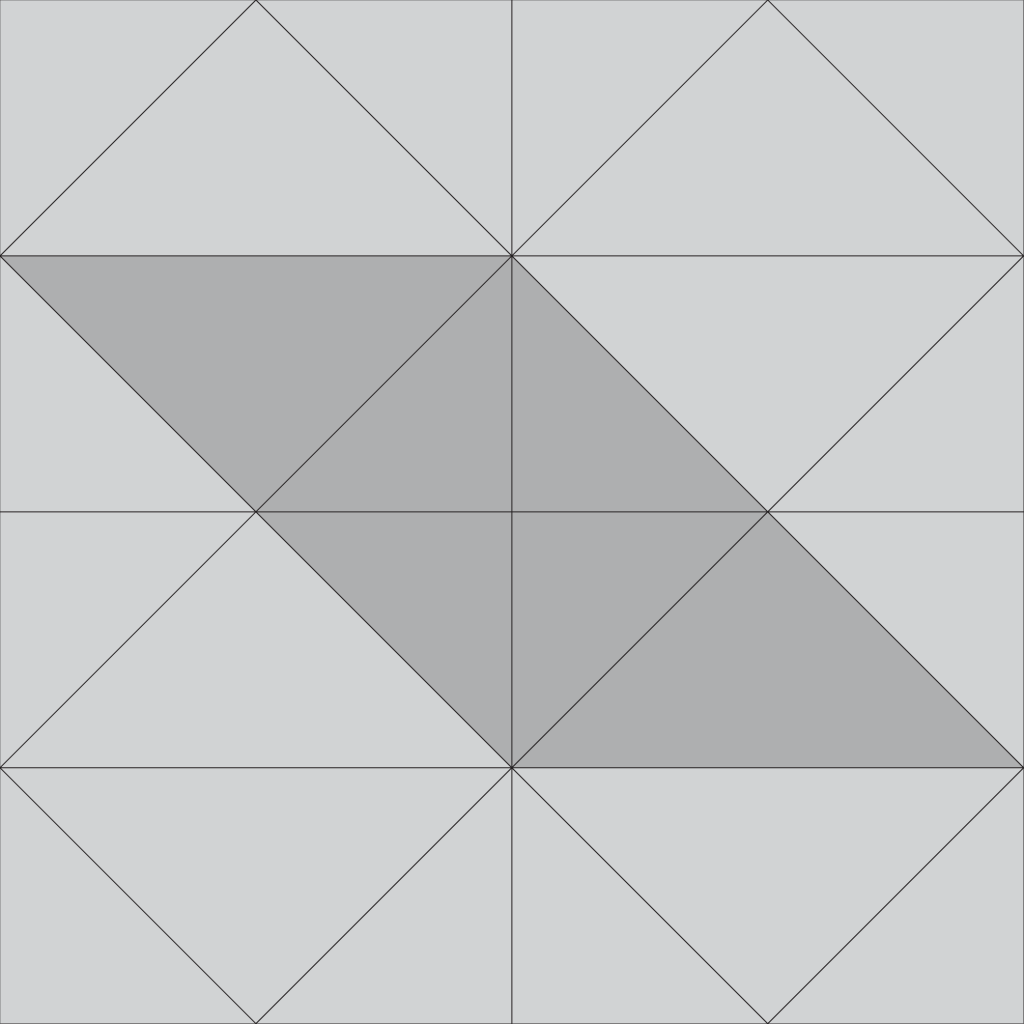
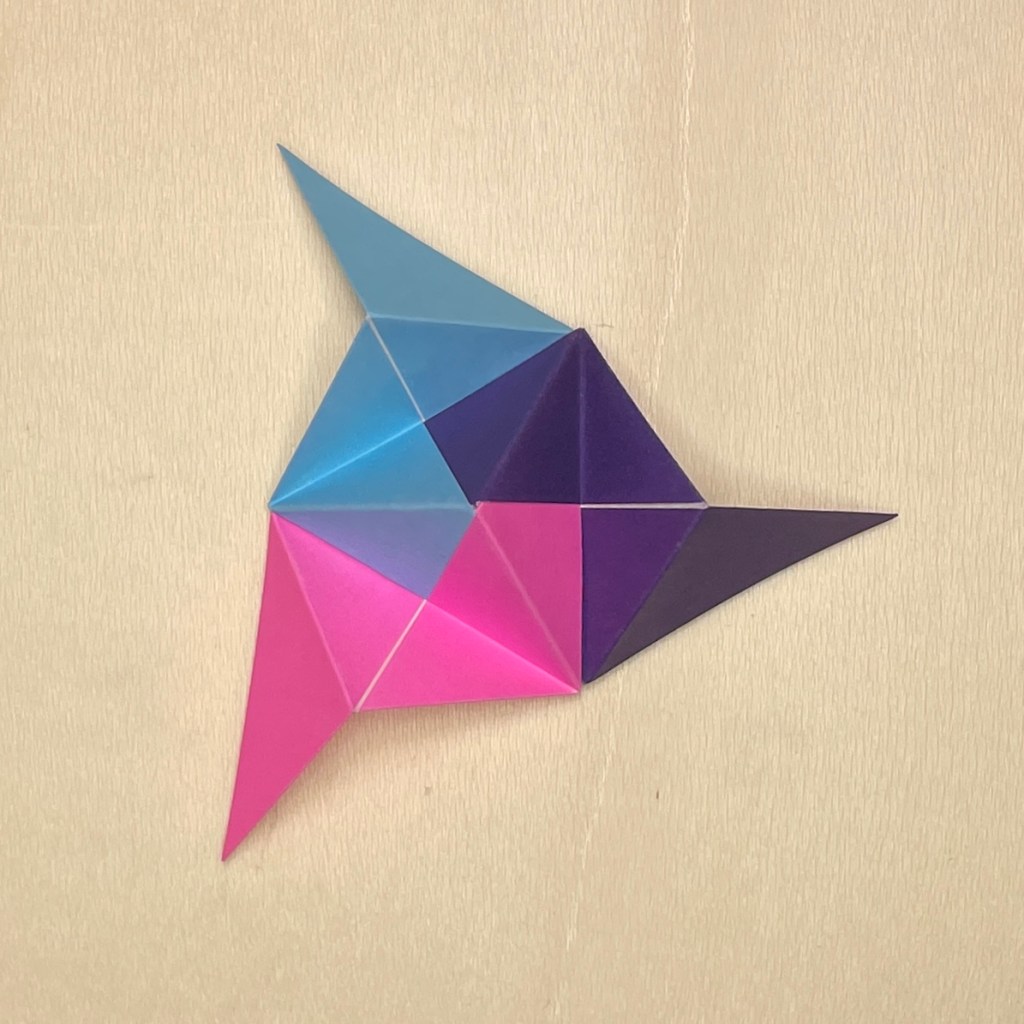
3 units interlock, creating a pyramid with an open base. Each unit is a parallelogram made of 4 isosceles right triangles, which become the walls of the pyramid. The diagonal center creases of the units form the base of the pyramid––an equilateral triangle.
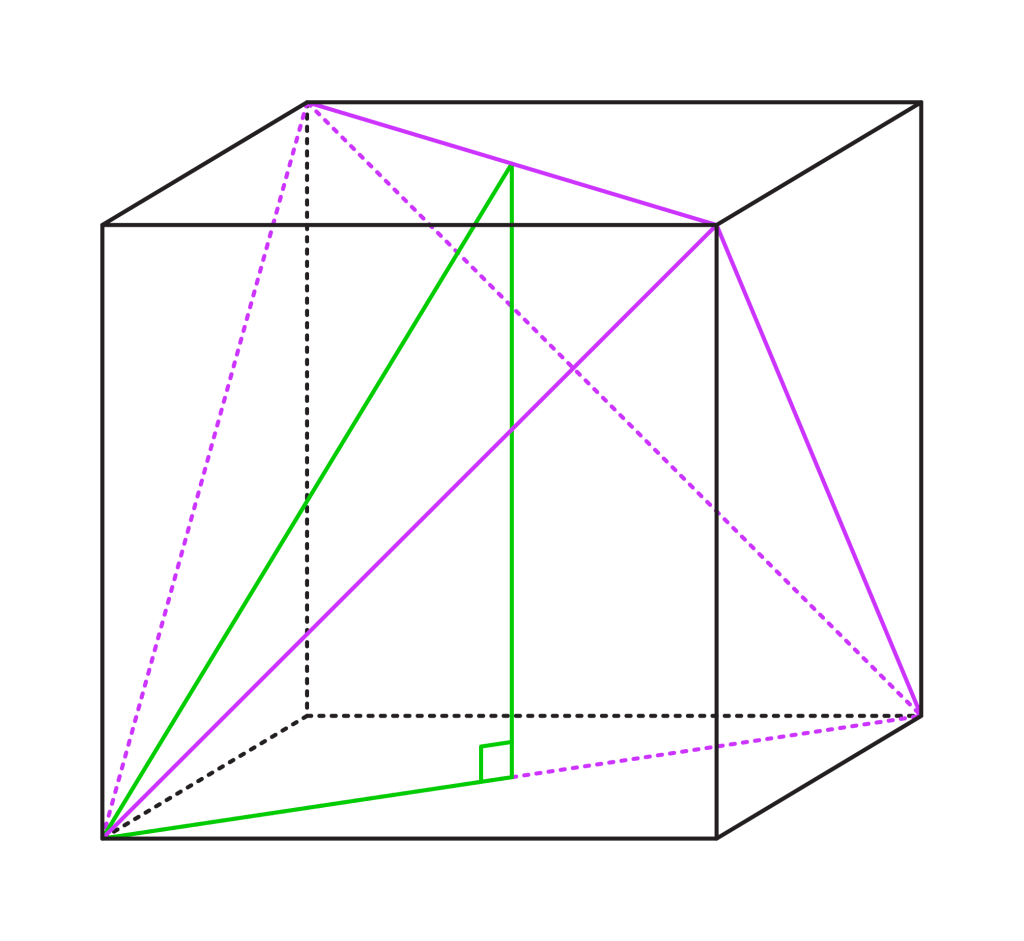
A regular tetrahedron (aka triangular pyramid) can be inscribed within the faces of a cube, by drawing a single diagonal line on each face so that they all connect to form 4 equilateral triangles:
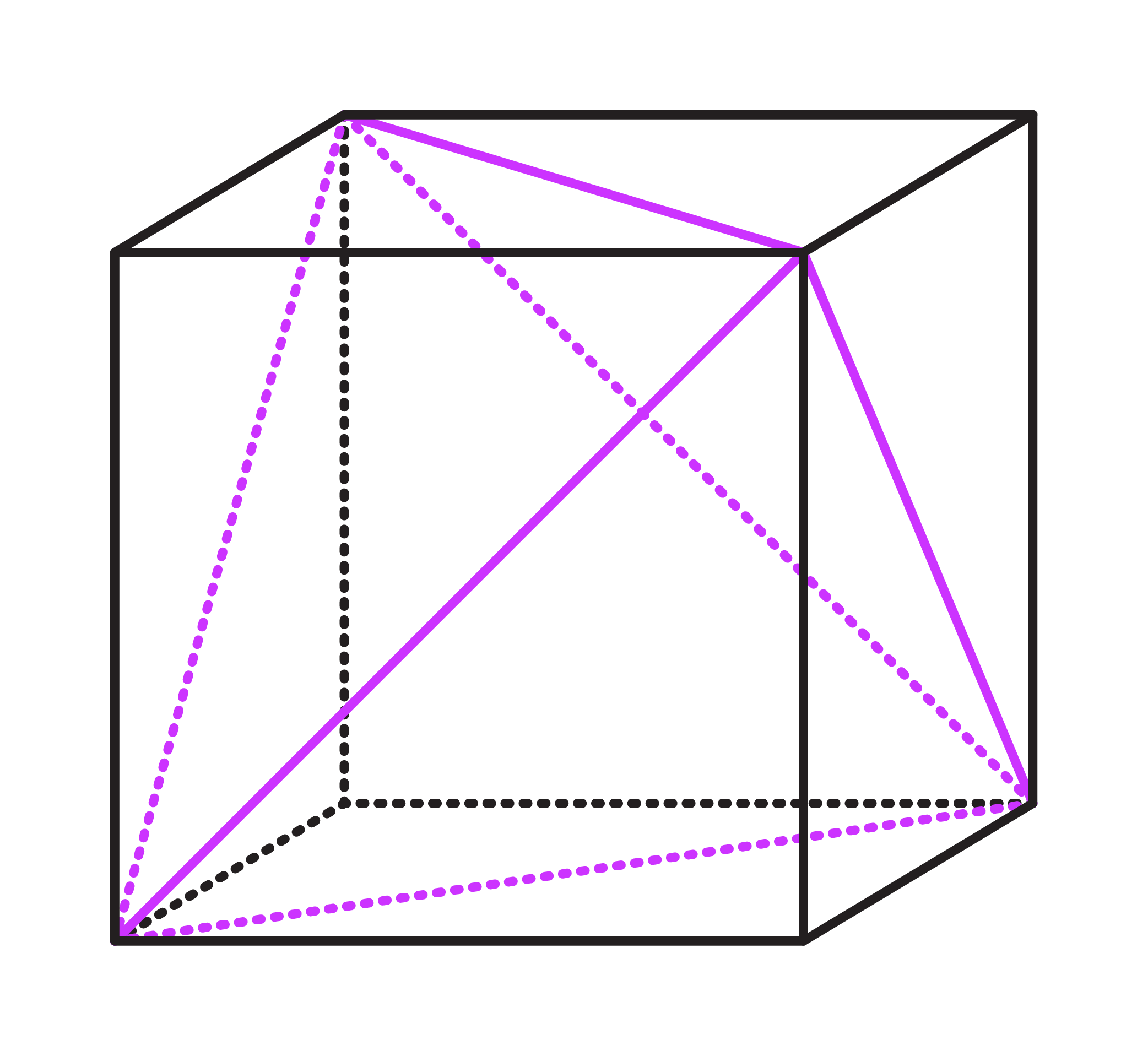
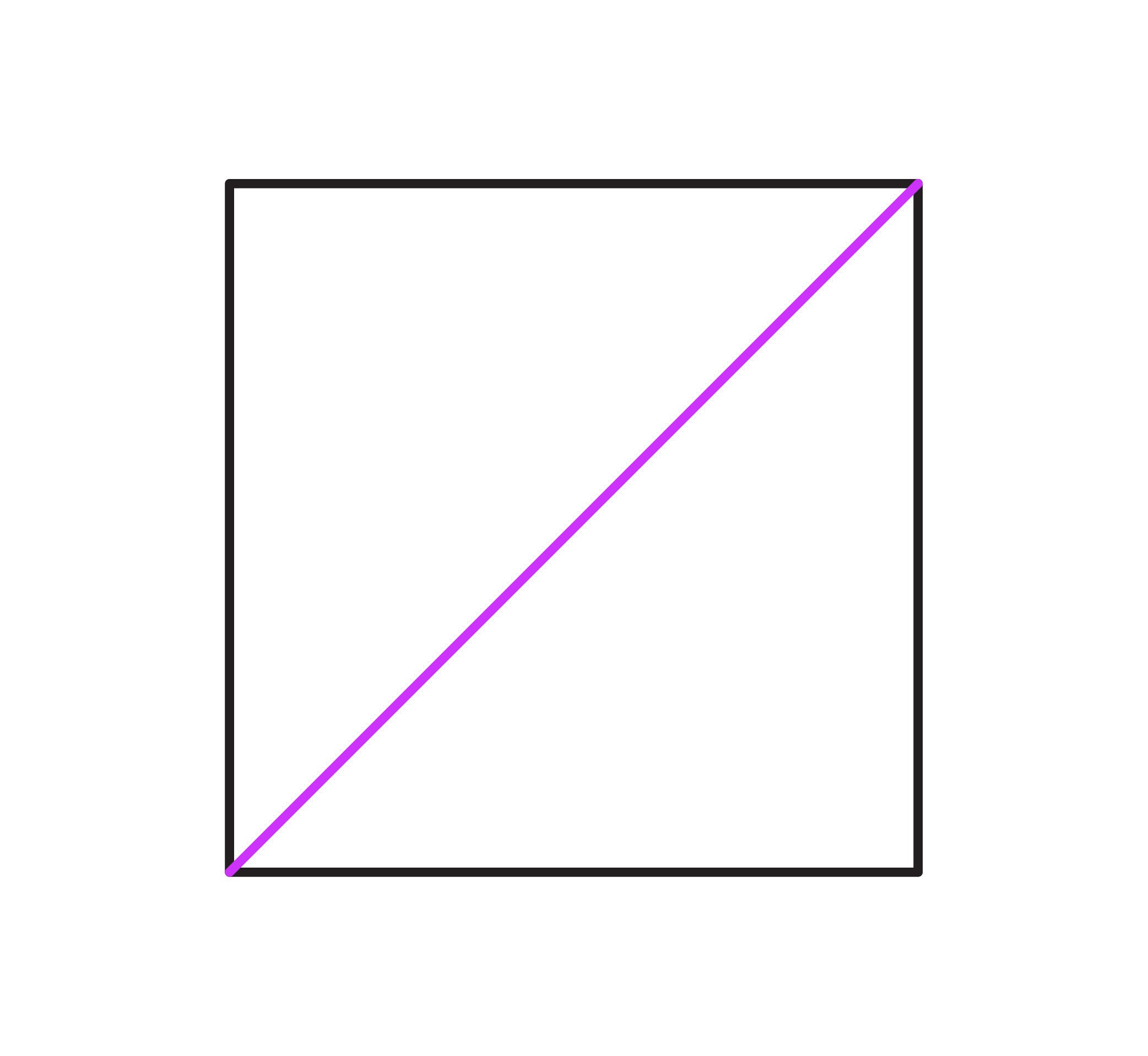
(There are 2 different orientations the inscribed tetrahedron can have– one for each diagonal of the square.)
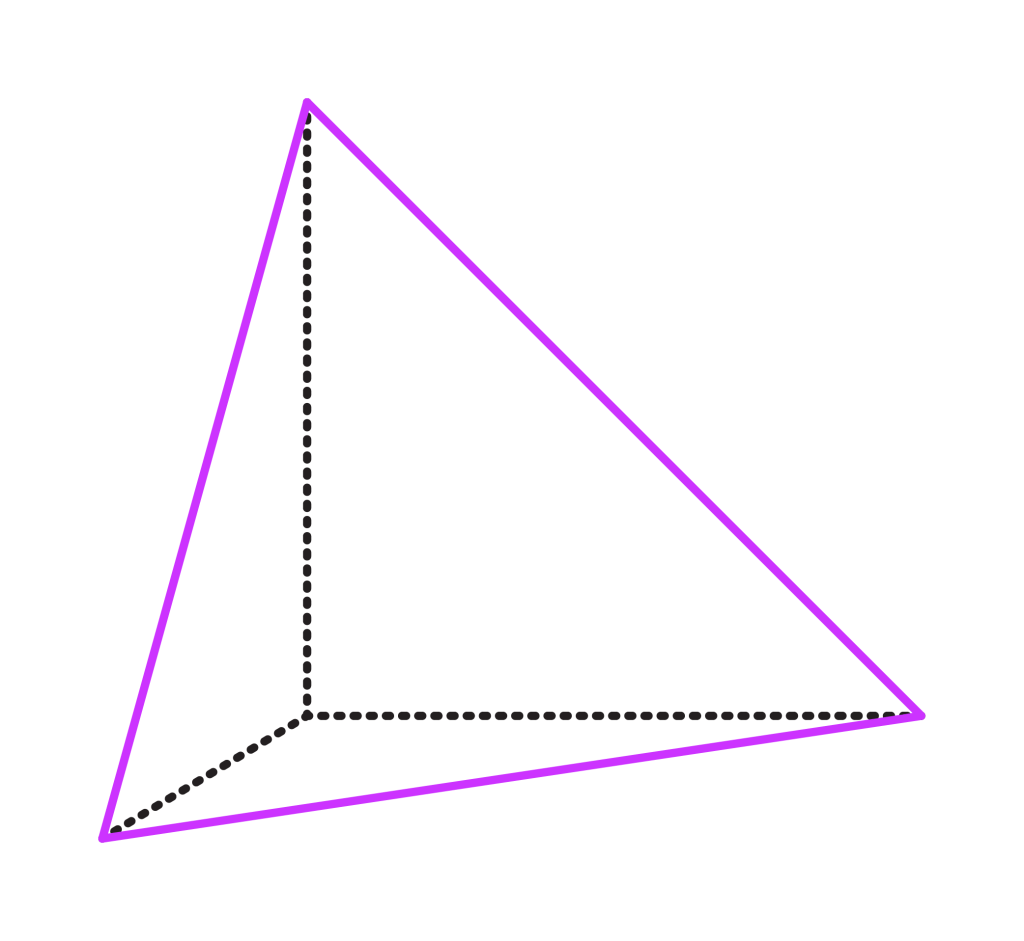
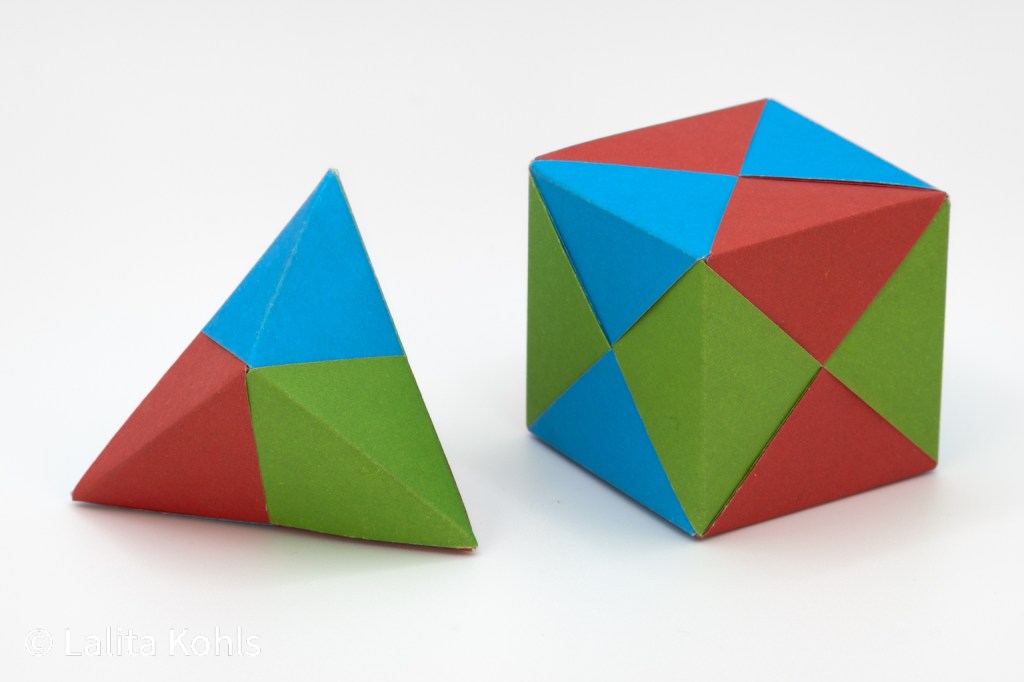
The Sonobe pyramid is equivalent to a corner of a cube, cut off along one of the faces of the inscribed tetrahedron:
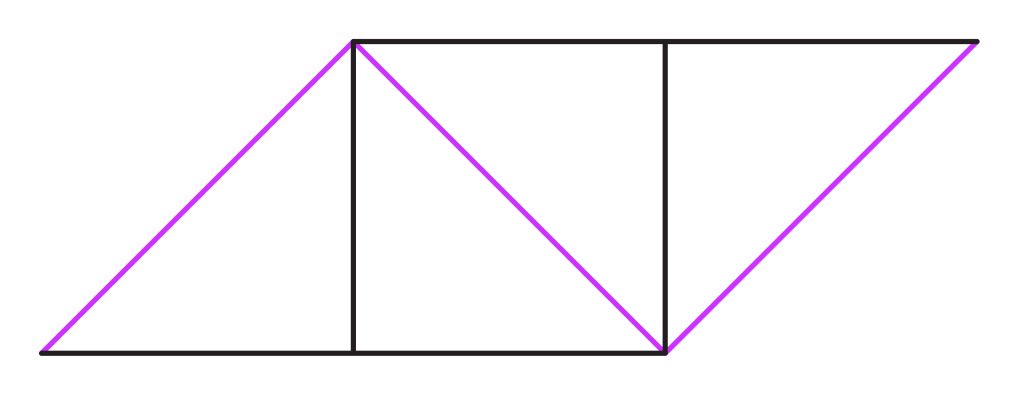
This means that 4 Sonobe pyramids can be joined together to make the full cube, requiring a total of 6 units– one for each face of the cube, or one unit per edge of the tetrahedron. Since the isosceles triangles become coplanar to form square faces, the units don’t need the final crease in the center.
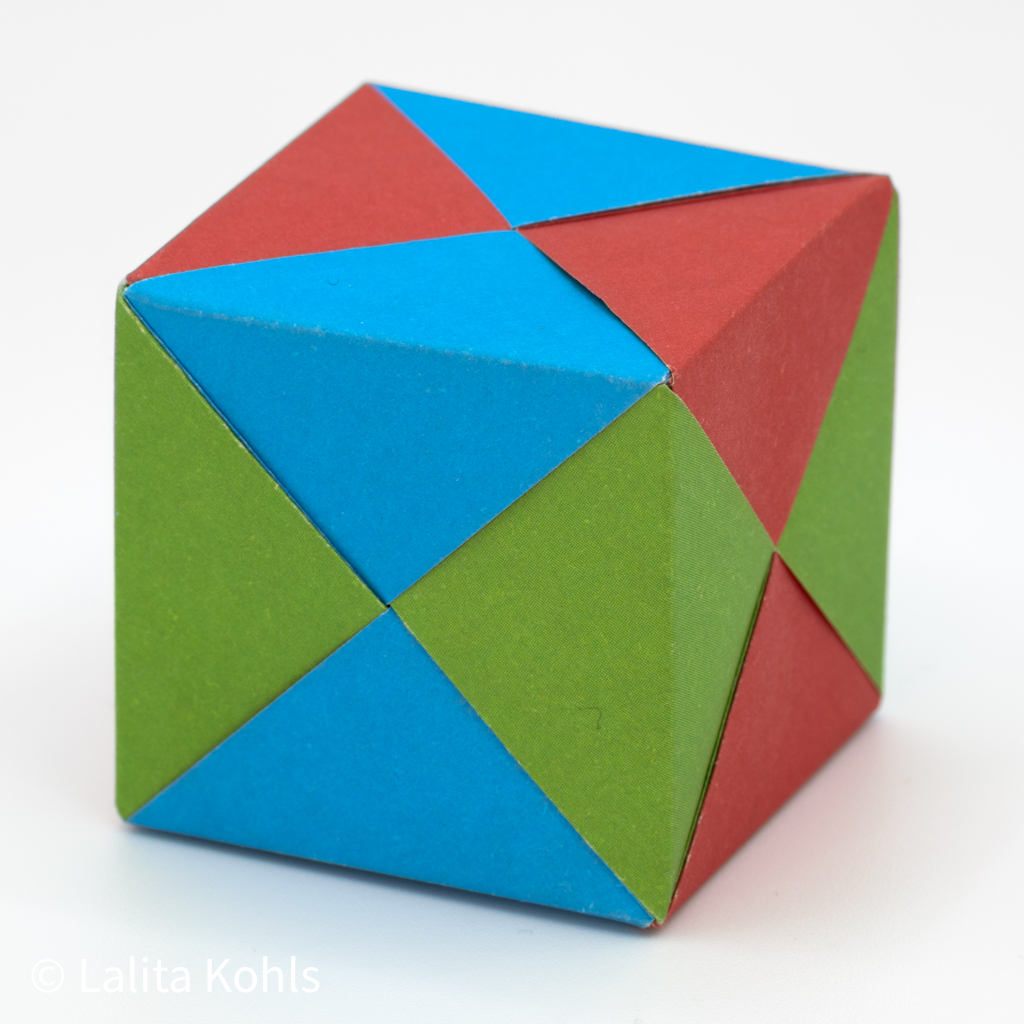
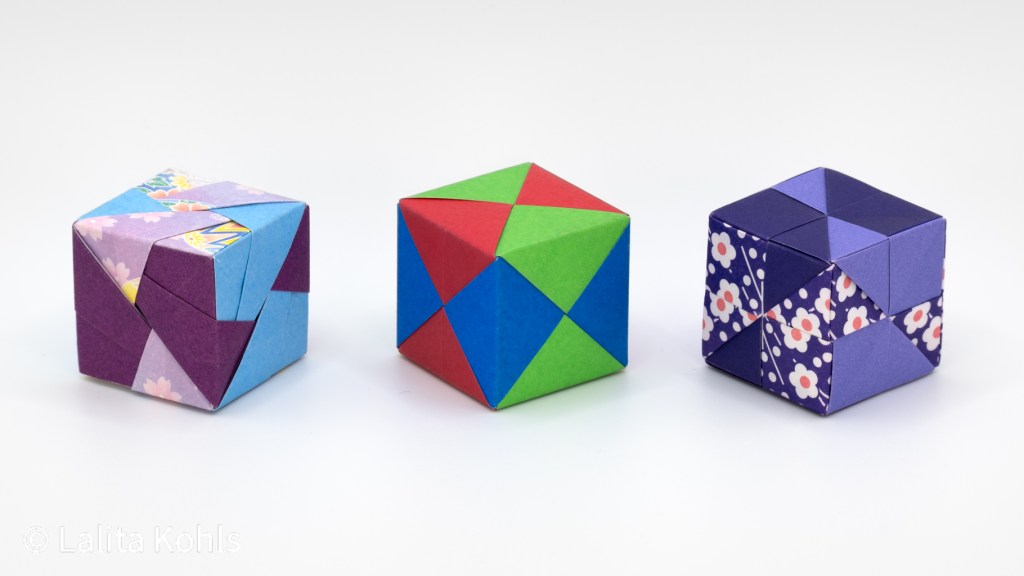
Most typical Sonobe constructions are made by repeating the same pyramid configuration, which means they all have the underlying structure of a regular deltahedron, or a solid whose faces are all equilateral triangles. Each construction requires one unit for every edge of the underlying deltahedron.
So the Sonobe cube can also be thought of as a tetrahedron augmented with Sonobe pyramids. And in general, most Sonobe constructions are augmented regular deltahedra.
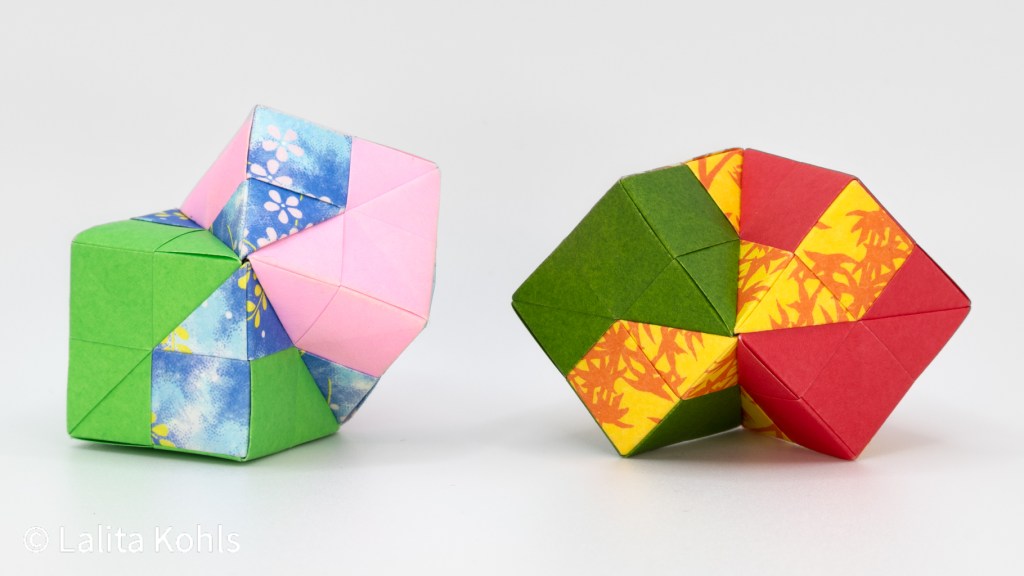
Although the tetrahedron is the smallest possible deltahedron, an even simpler construction can be made with only 3 units:
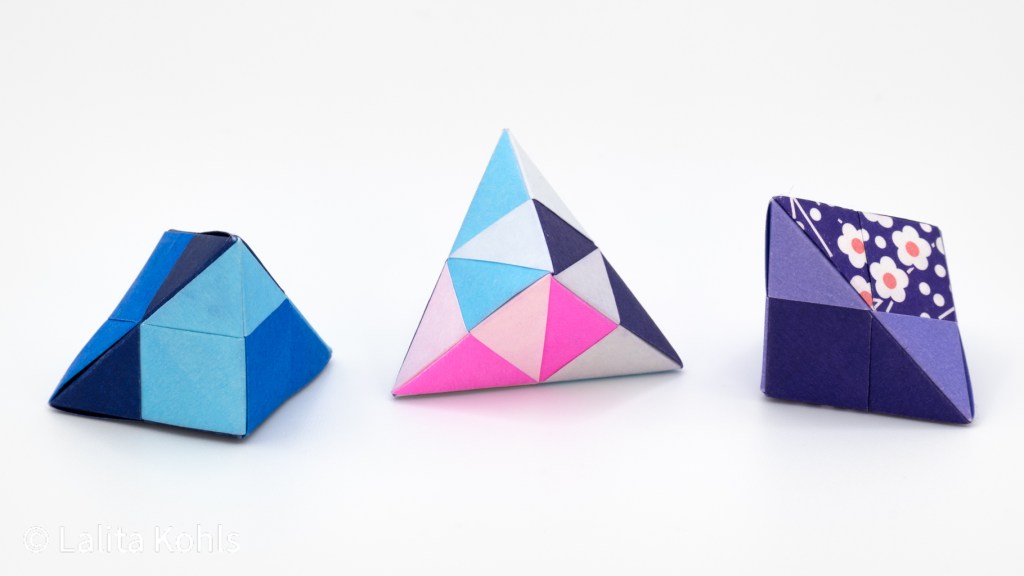
The underlying “deltahedron” is just 2 triangles back to back, so it’s not a proper 3D solid. The direction of the center fold on each unit is reversed, so the units can wrap around and connect on the other side. This construction is commonly referred to as the “Jewel” or “Toshie’s Jewel”, after its creator Toshie Takahama.
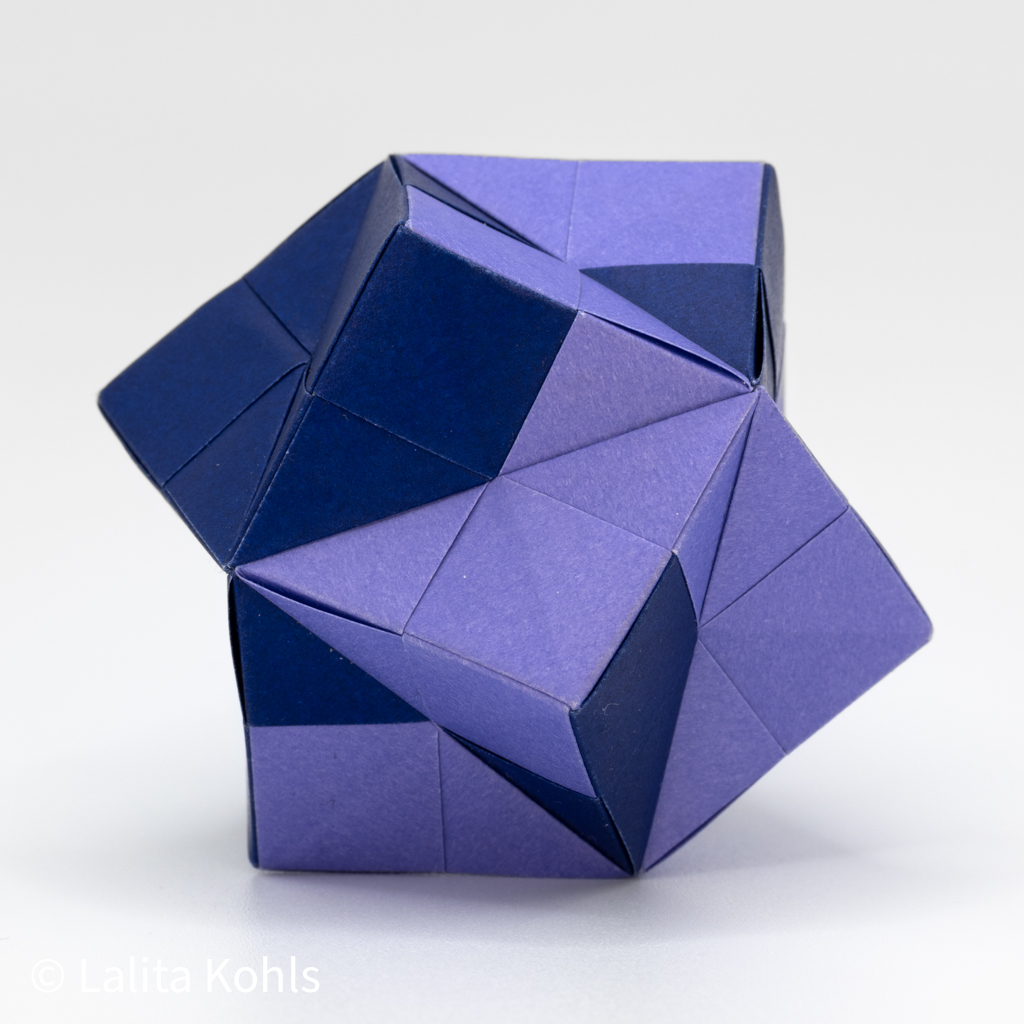
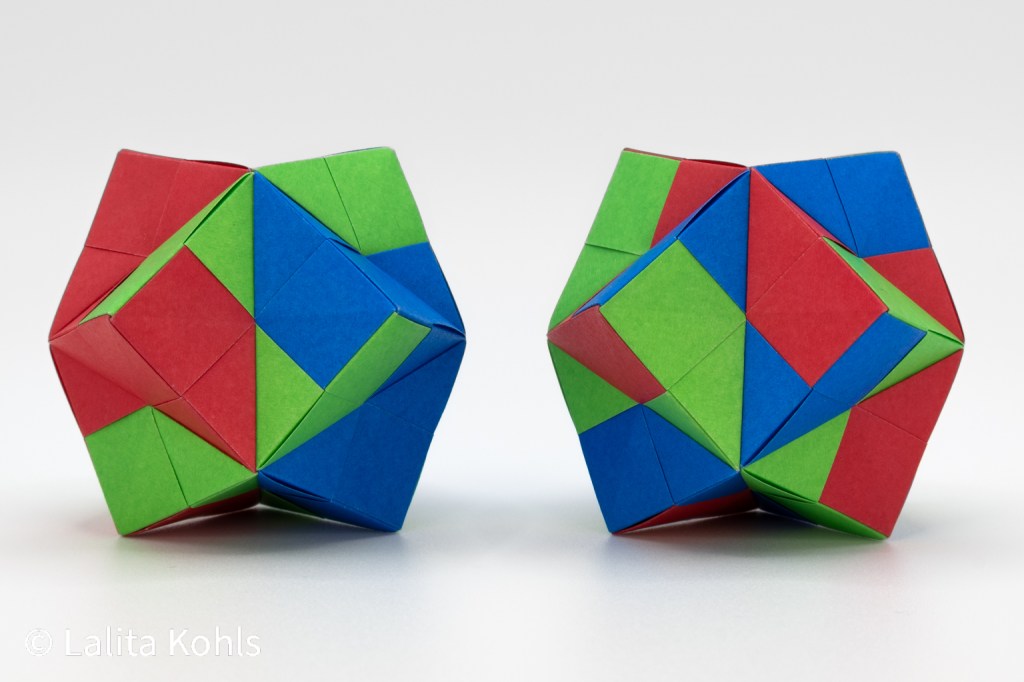
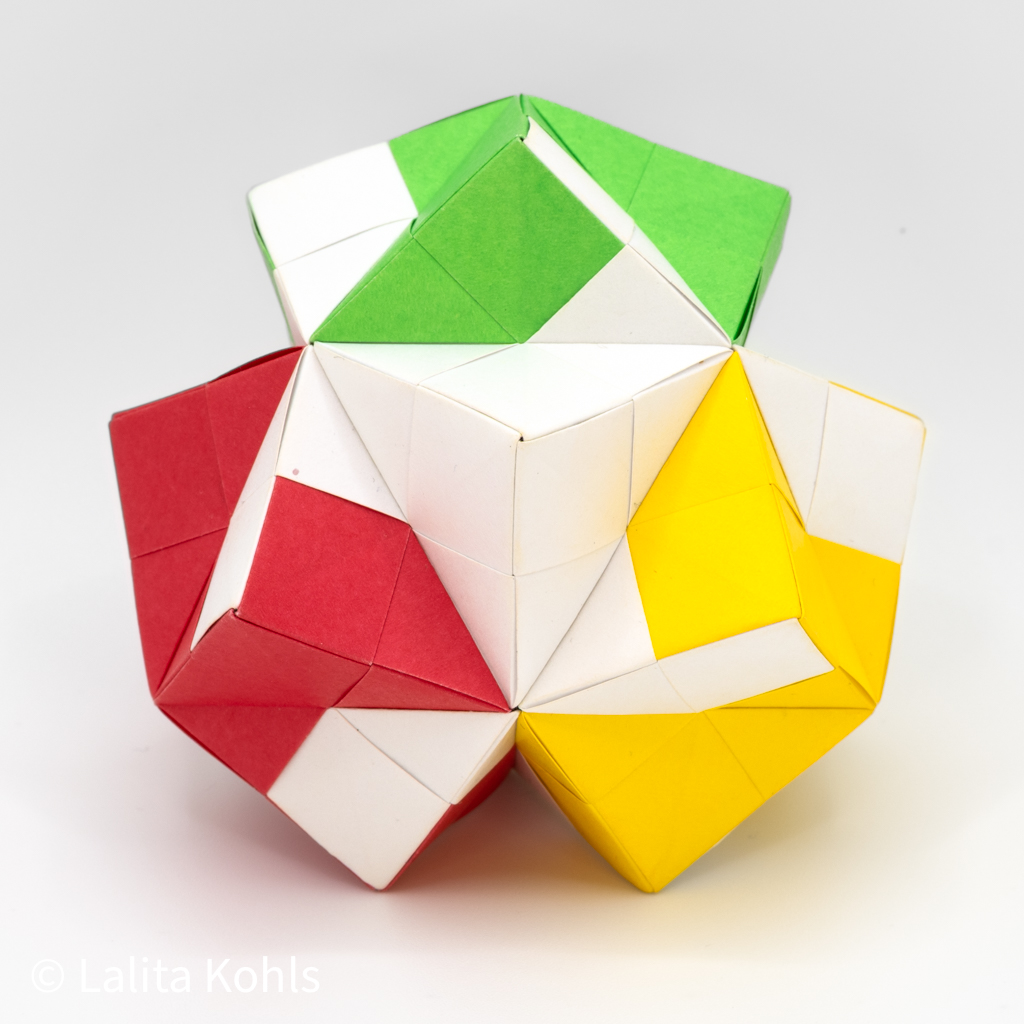
With 9 units you can make a structure that looks like 2 intersecting cubes:
The underlying deltahedron is a triangular bipyramid, or 2 tetrahedra stuck together. The 3 units around the middle have center creases, while the 6 units on the ends do not.
The square bipyramid (or octahedron), is made from 12 units:
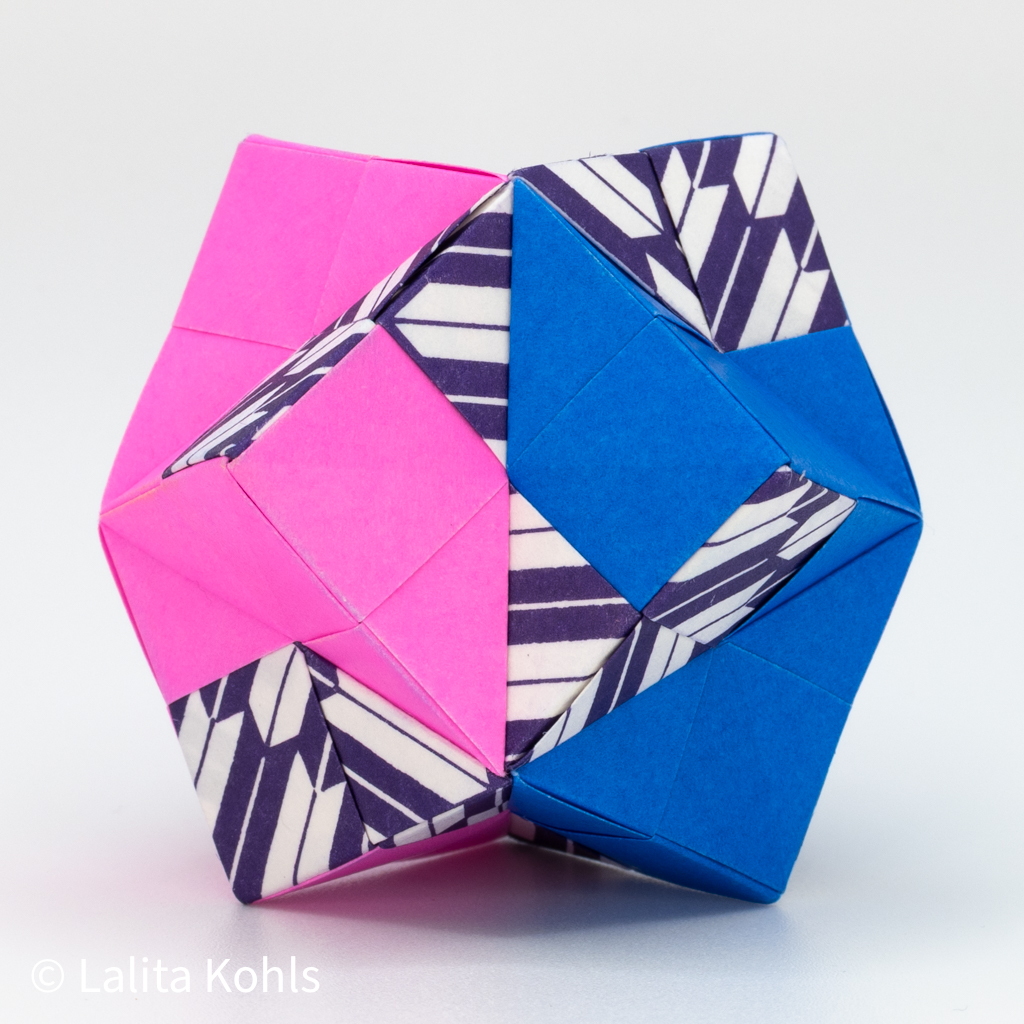
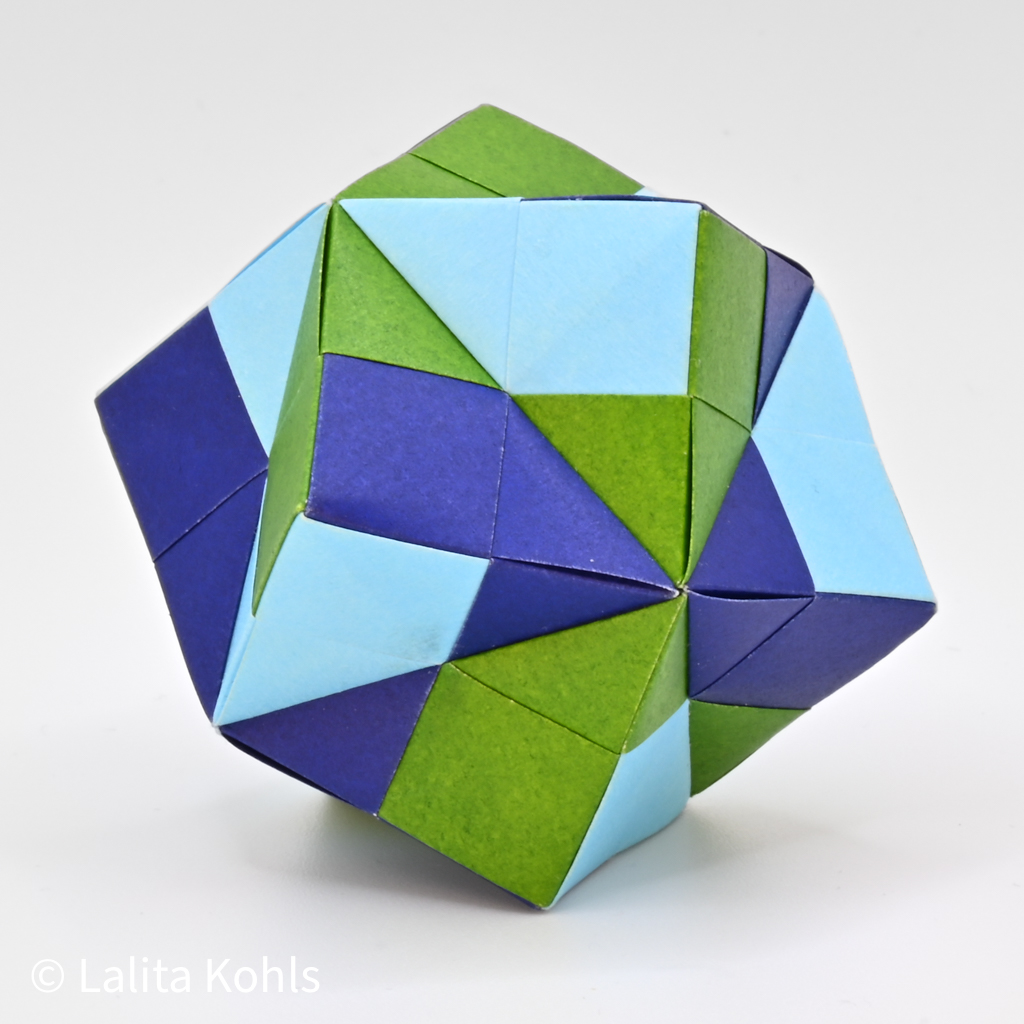
The pentagonal bipyramid has 15 edges, with 5 around each of the 2 opposing vertices and 5 around the side. The resulting Sonobe construction looks like 5 intersecting cubes:
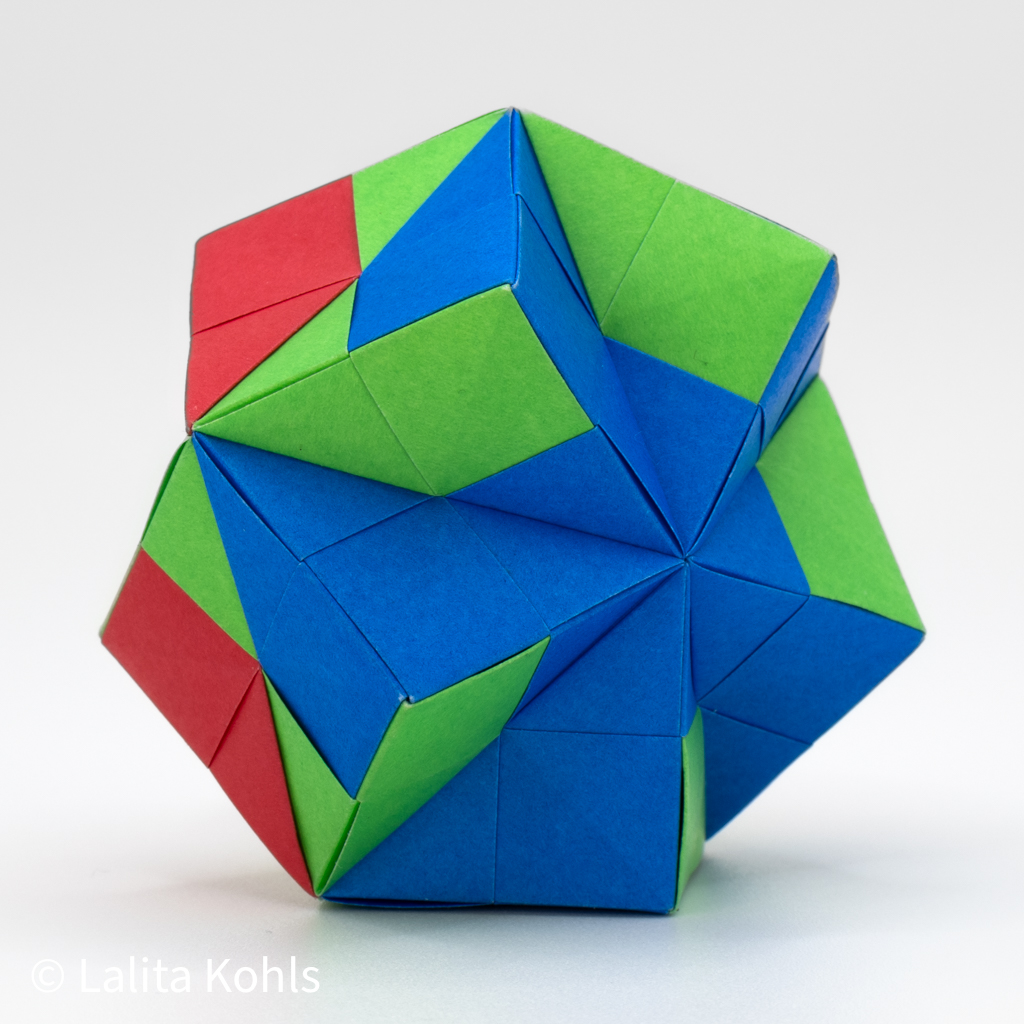
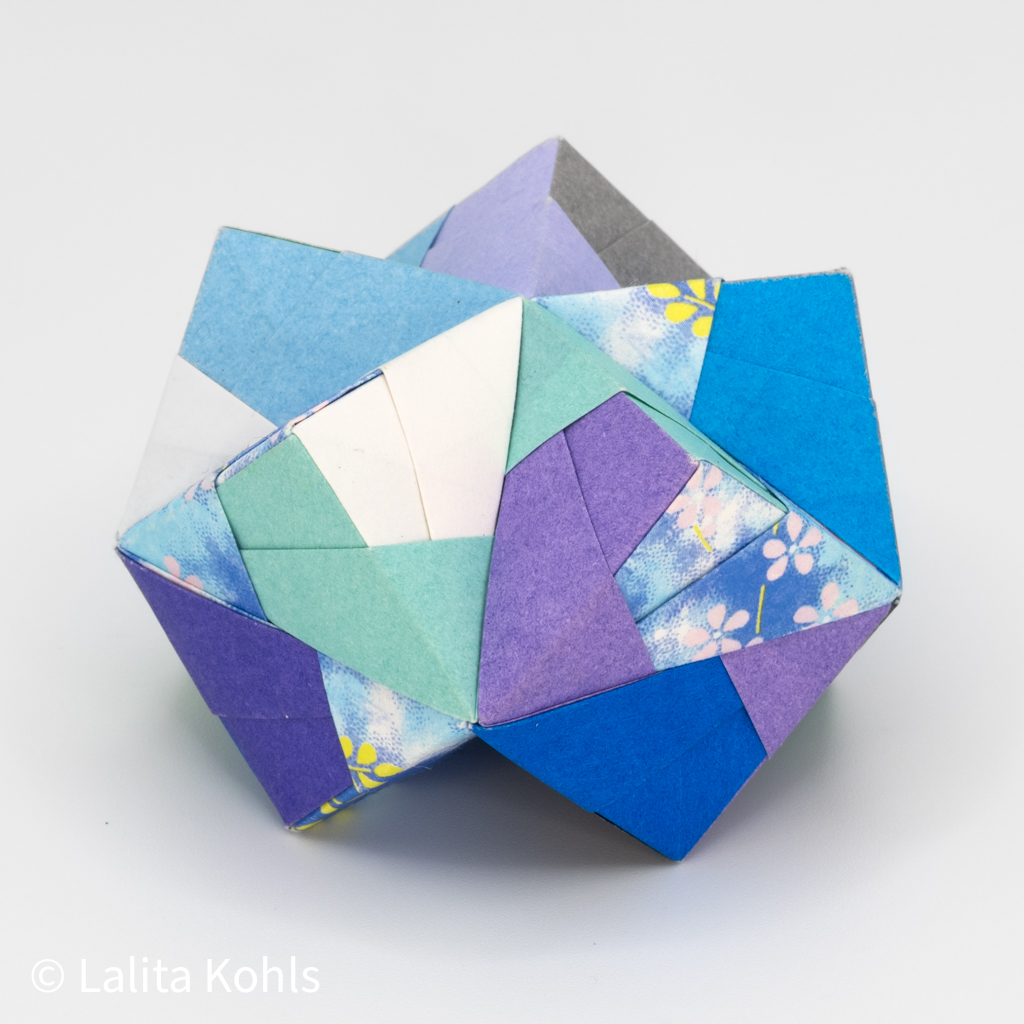
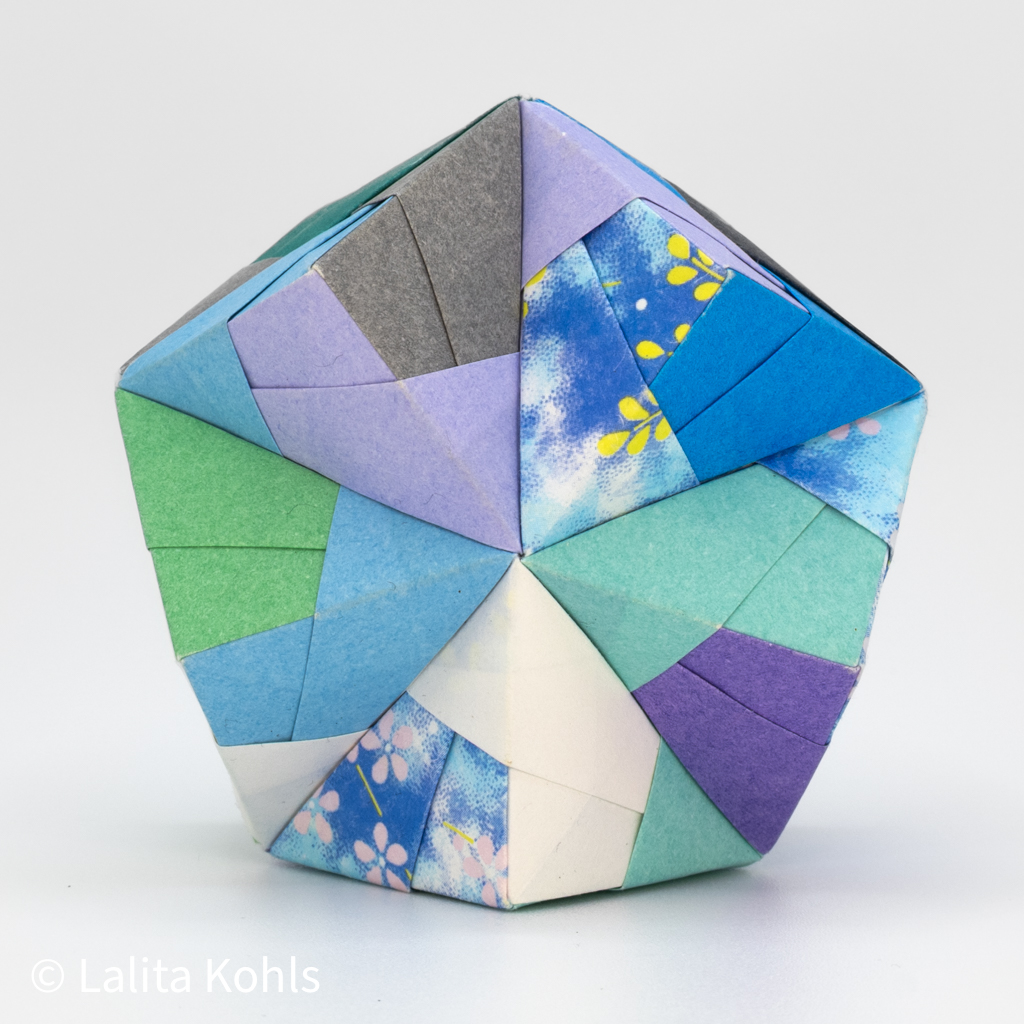
5 tetrahedra connected around a common edge will almost close up, with a few degrees of extra space. The angle between adjacent faces (or dihedral angle) of a tetrahedron is 2*arctan(√2/2)≈70.53°, making the total angle for 5 tetrahedra around 353°.
For the purpose of origami the paper will easily connect, and you can leave out the center fold on the units making up the sides of the pentagon to create the illusion of 5 cubes intersecting perfectly.
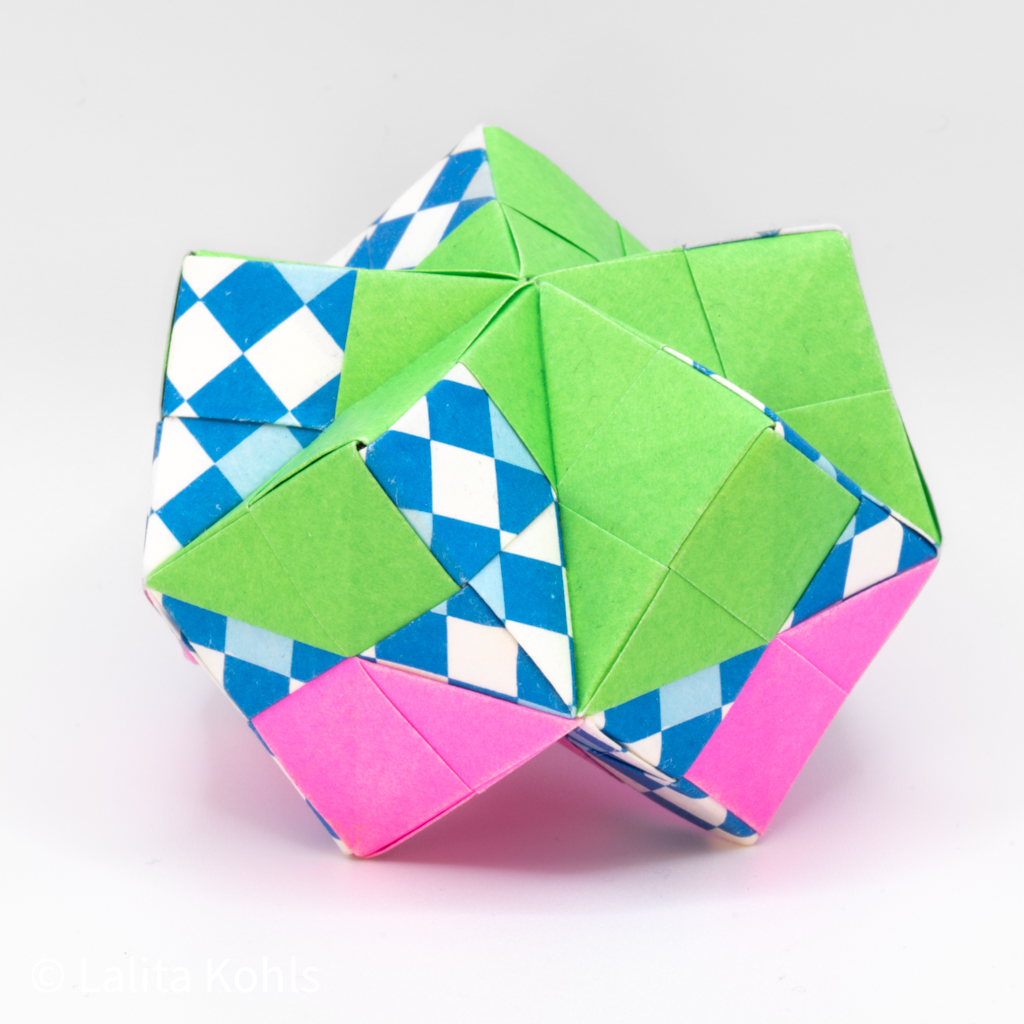
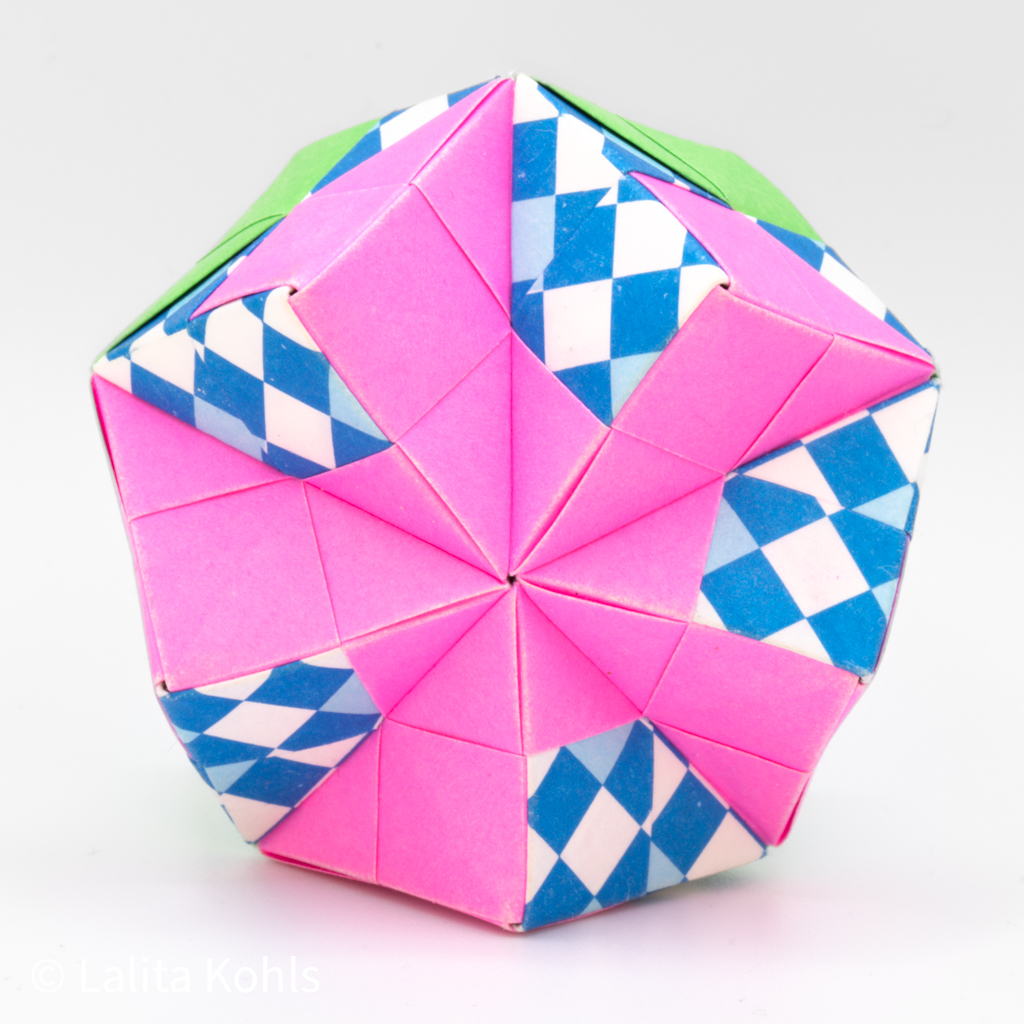
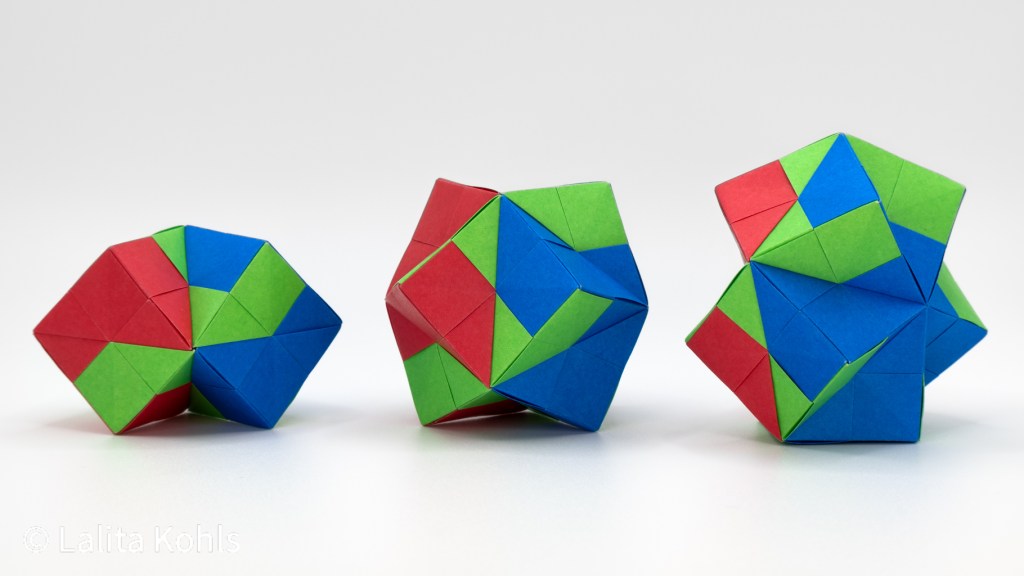
Adding a band of triangles to the middle of a bipyramid is called gyroelongation. The gyroelongated square bipyramid is made from 24 units.
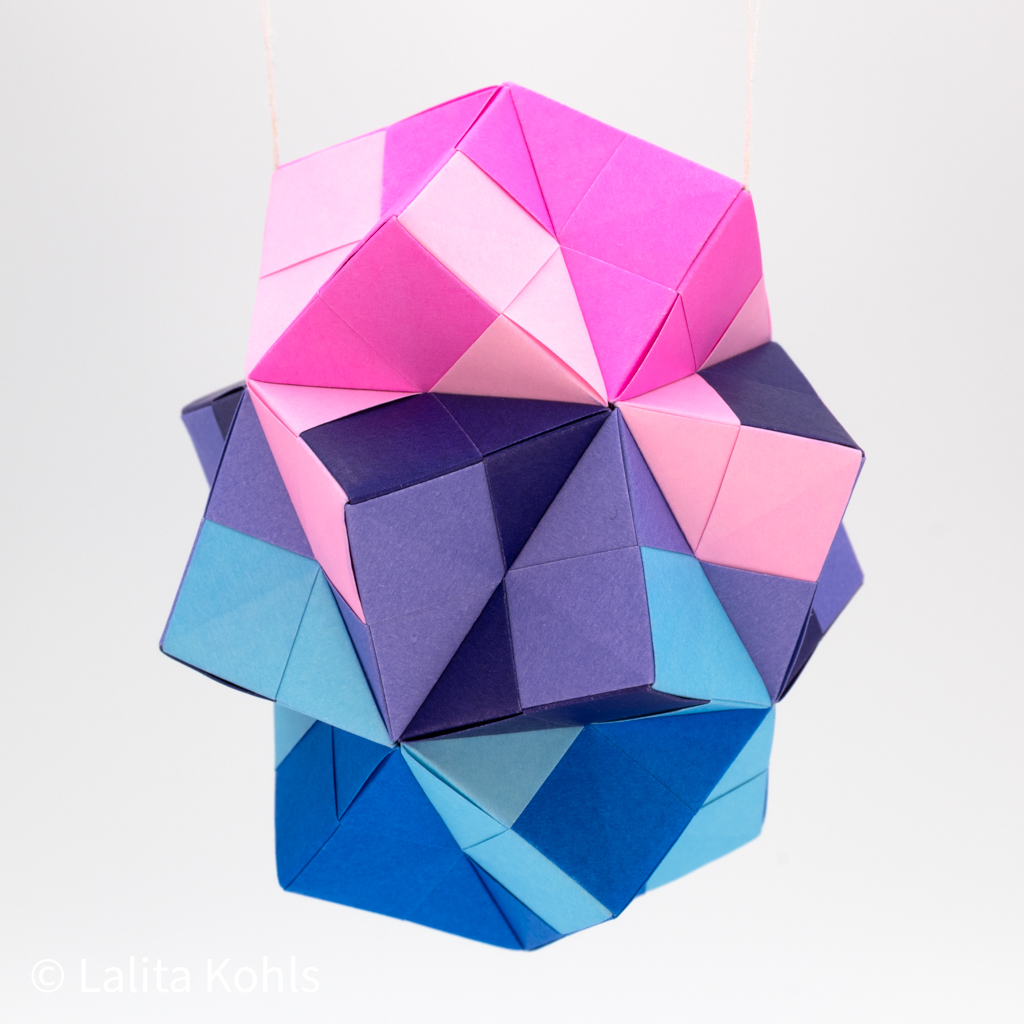

The gyroelongated pentagonal bipyramid (aka icosahedron) requires 30 units:
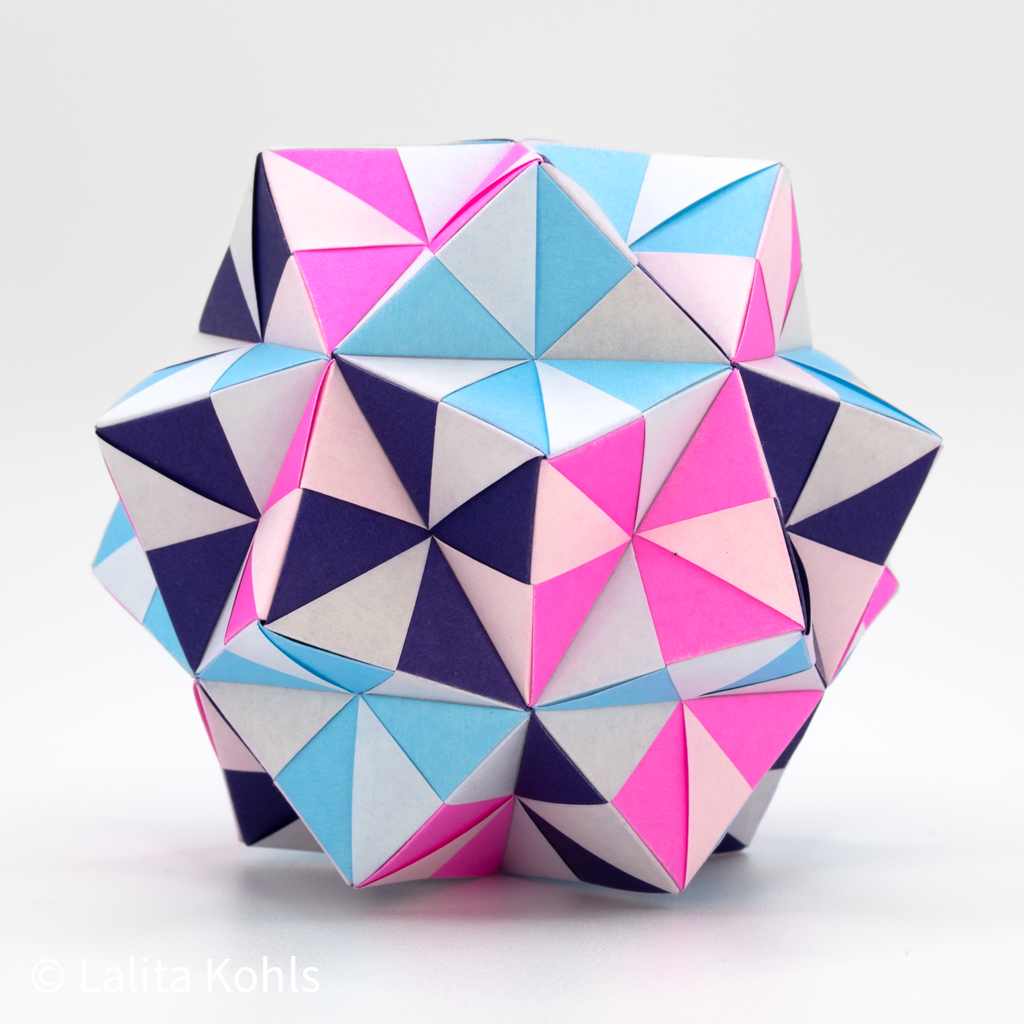
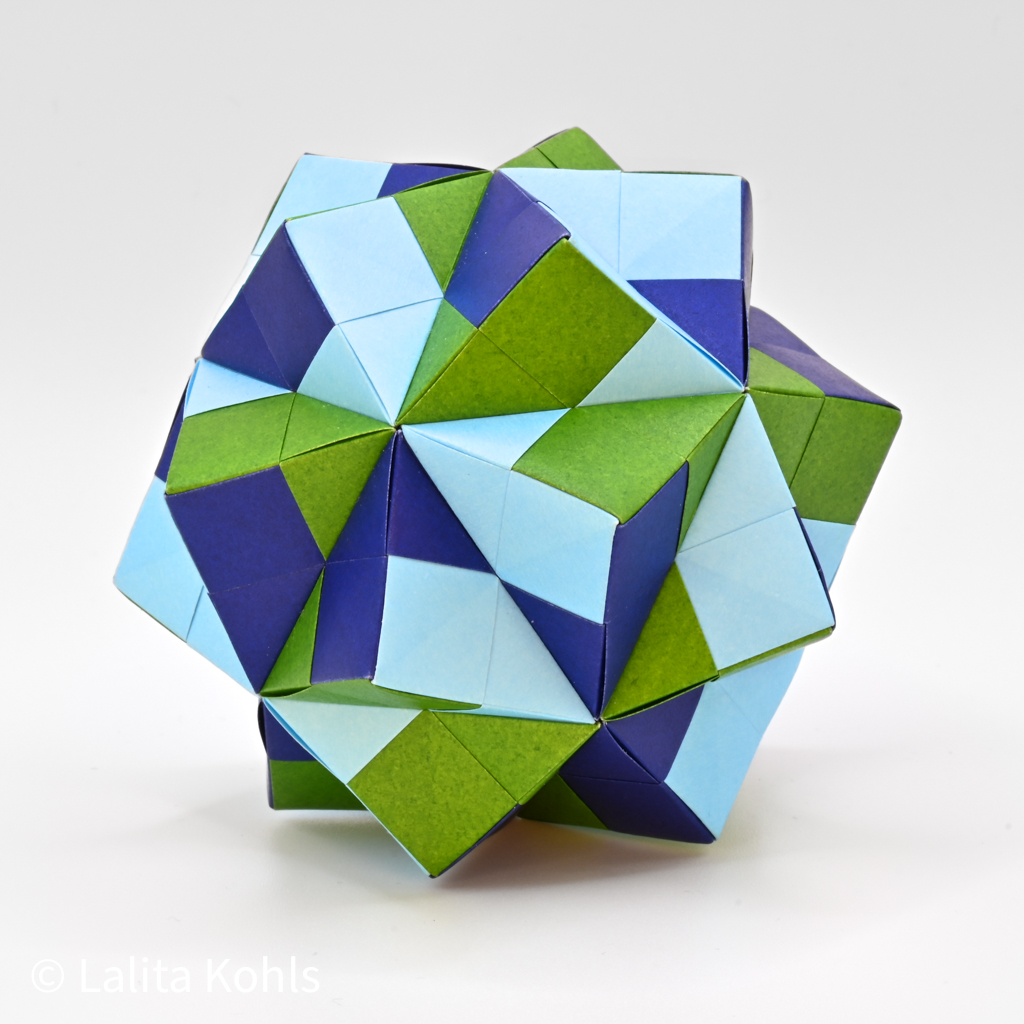
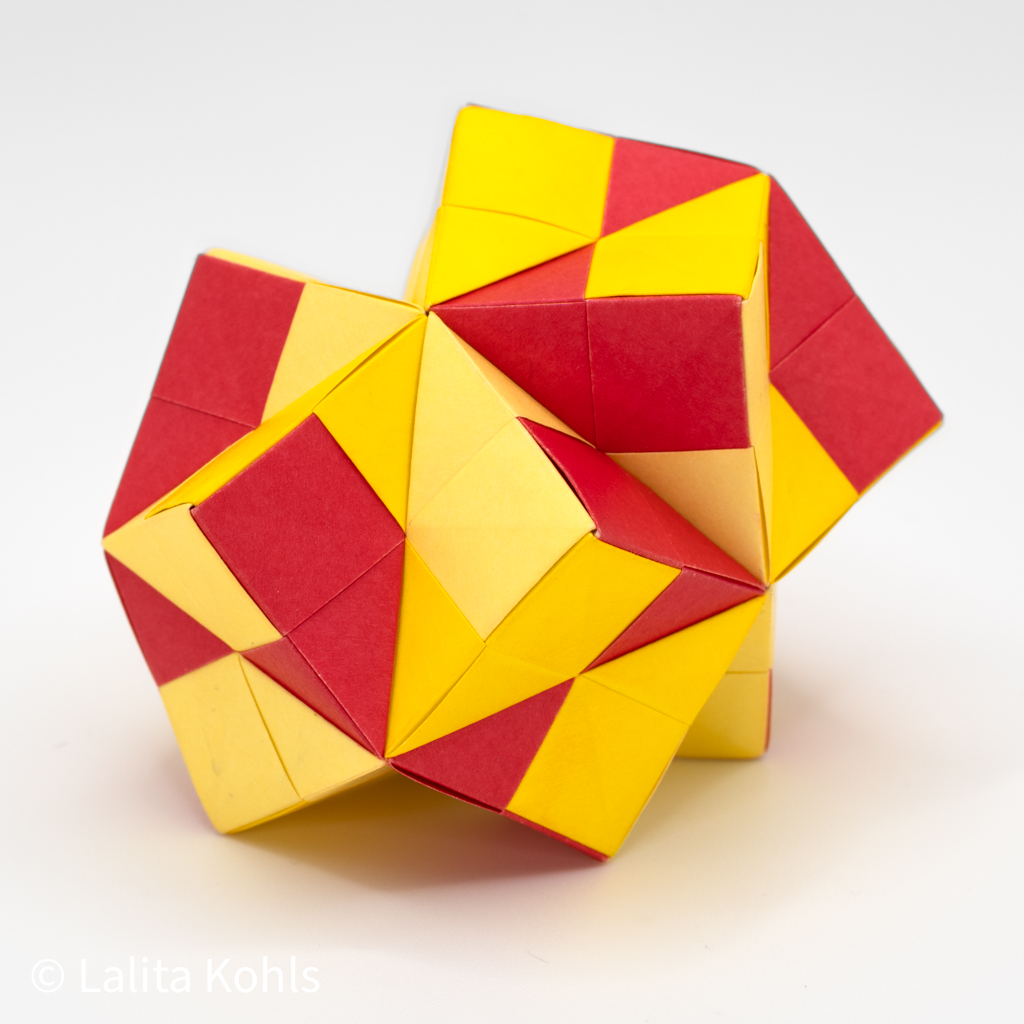
All of the underlying structures so far have been convex deltahedra. There are 2 more: The snub disphenoid (18 units), and the triaugmented triangular prism (24 units).
Recommended Content
- This page on the history of the Sonobe module, by David Mitchell.
- The book Unit Origami: Multidimensional Transformations by Tomoko Fuse has instructions for folding the “bird” and “pinwheel” unit variations that I use for most of my models.
- This blog post from jblblog about the underlying geometry of Sonobe constructions.
- And this Vsauce video explaining how to construct the 8 strictly convex deltahedra out of magnetic tiles.
 Lalita Kohls
Leave a comment